Sentinel ist echte dezentrale VPN-Infrastruktur – eine quelloffene Cosmos-Chain mit On-Chain-Sitzungen, ausschließlicher Wallet-Anmeldung und Preisen pro Gigabyte, die unterhalb der meisten kommerziellen VPNs liegen – doch es handelt sich um ein Protokoll und einen Marktplatz, nicht um ein VPN-Unternehmen, das du zur Rechenschaft ziehen kannst. Dein Datenverkehr verlässt das Netz über Knoten, die von anonymen Fremden betrieben werden und die das aufnehmen können, was IVPN in seinem Vergleich als „kein zentrales Logging, Knoten können Logs führen“ bezeichnet. Es gibt keine unabhängige Sicherheitsüberprüfung irgendetwas, kein verifizierbares juristisches Entity hinter dem Projekt im Jahr 2026, und Verbindungen nutzen standardmäßig einen einzelnen Hop ohne Option für Multi-Hop. Die Zuverlässigkeit ist noch in der Entwicklung: Das Chain-Upgrade v12 im Oktober 2025 störte gleichzeitig jede dVPN-App im Netzwerk und sperrte etwa ein Dutzend Validatoren, und selbst sein eigener Subreddit fragt aufgrund von Marketing- und Kommunikationslücken „Ist Sentinel tot?“. Die Token-Ökonomie fügt eine Ebene hinzu, die herkömmliche VPNs nicht haben – du musst zuerst P2P (oder USDC) beschaffen, und die Kryptowährung notiert 99,9 % unter ihrem Hochpunkt aus dem Jahr 2021. Wähle es für Zensurresistenz, günstige Bandbreite ohne KYC und Entwicklerfreiheit; wähle es nicht, wenn du die Rechenschaftspflicht, den Support oder das geprüfte No-Logs-Verfahren eines Anbieters wie Mullvad erwartest.
Open SourceKrypto akzeptiert4 rote FlaggenFakten verified - sentinel.co, docs.sentinel.co (home, P2P coin, dVPN apps, node setup pages), GitHub sentinel-official/sentinelhub, stats.sentinel.co, CoinGecko API, two CoinDesk articles (Yahoo syndication), TechRadar, the Privacy Guides forum thread, the IVPN dVPN comparison guide, the bestcloudmining Sentinel review, and four Reddit/HN API archives (arctic-shift, HN Algolia) all fetched live 2026-11-02
HitBTC breach, August 2021: 40 million DVPN user coins stolen after the exchange exposed its mnemonic phrase; Sentinel blamed the exchange's 'gross negligence' (CoinDesk) - users paid the price for a third-party custody failure
2026 accountability gap: no legal entity, no audits, no warrant canary and no status page SLA - there is nobody to subpoena and nobody to sue if the network fails you
Node revenue is openly described in independent coverage as substantially subsidised, and node hosts get 80% of payments with 20% skimmed to stakers - token-incentive economics that can change with governance votes
+1 weitere rote Flaggen - vor der Anmeldung aufklappen
Official stats are self-reported and internally inconsistent (70 vs 90+ countries on one page; 1,500+ providers vs 50,000+ node operators on LinkedIn), with no independent verification of network size
Review
Entwurf von Qwen3, faktengeprüft von der vpnvergleich-Redaktion · Review-Version 2 · Text aktualisiert 2026-11-02 · Fakten Stand 2026-11-02 · wie wir verifizieren
Ehrlichkeits-Hinweis: wir haben keine eigenen Tests zu Sentinel dVPN (Cosmos bandwidth marketplace, token P2P) gelaufen (Leak-Tests, Tempo, Kill Switch). Alles auf dieser Seite ist quellbasierte Meta-Recherche mit datierten Links. Sobald wir testen, erscheinen die Ergebnisse hier und im Änderungsprotokoll.
Sentinel dVPN is a decentralized bandwidth marketplace built on its own Cosmos-based blockchain, not a traditional VPN provider. It enables third-party apps and independent node hosts to offer pay-as-you-go or subscription-based dVPN services using the P2P token. There is no verifiable legal entity behind the project in 2026 - governance is on-chain, and documentation is maintained by a validator called Trinity. You’re trusting anonymous node operators, not a company, and there’s no one to hold accountable if things go wrong.
Logging & privacy
Sentinel claims structural no-logs: “No company exists that could log your traffic,” citing its decentralized architecture. However, the logging evidence is policy-only - there are no third-party audits or court-tested validations. While the protocol is open-source and sessions are on-chain, exit nodes are run by independent parties who can log traffic, as confirmed by IVPN’s technical comparison: “No centralized logging, nodes can keep logs.” Jurisdiction is effectively undefined, with no legal entity to compel or challenge. There is no warrant canary, and no audit has ever been published.
Sentinel has no direct subscription; pricing depends on the path you take. The $1/month figure comes from the x402 plan at $0.033/day in USDC (~$1/month). Other third-party apps set their own fiat prices, while pay-as-you-go node rates are set individually in P2P tokens.Per-credit pricing means the renewal follows the intro at $1 with no intro-to-renewal hike. There’s no contract term or refund window defined at the protocol level. You can pay anonymously via wallet using P2P or USDC, though fiat payments through apps require personal details.
The network supports WireGuard, OpenVPN, V2Ray, Xray, Hysteria, and Amnezia protocols, with obfuscation via V2Ray VMess/VLESS and Hysteria - tools useful against deep packet inspection. Apps like Sentinel Shield support Android, iOS, Mac, Windows, and Linux. The network claims 1,500+ servers across 70 countries, supports P2P traffic, and is open-source (Apache-2.0). However, there is no multihop, no kill switch confirmed, and no evidence of streaming support. Performance varies by node and app - no independent testing has been conducted.
Ownership & track record
No legal owner is verifiable. The project originated from the SNT Foundation/Exidio in 2018, but current operations are maintained by validator "Trinity" with no corporate transparency. Red flags include the 2021 HitBTC breach that stole 40 million DVPN tokens from users, blamed on the exchange but highlighting custody risks. The 2025 v12 chain upgrade disrupted all dVPN apps network-wide, jailing validators and exposing fragility. Community sentiment is mixed: users celebrate 1 million on-chain subscriptions but question whether the project is still active due to poor communication.
Censorship resistance
Sentinel supports strong obfuscation tools - V2Ray, Hysteria, and Amnezia - which are effective against state-level censorship like China’s GFW or Iran’s filtering. The NORSE Labs DVPN Telegram bot and other apps offer ways to bypass blocks. However, reliability in high-censorship regions is inconsistent, with Reddit users reporting connectivity issues in Iran. Because nodes are globally distributed and apps can whitelist trusted exits, it can work where traditional VPNs fail - but expect trial and error.
Verdict
Sentinel is a real, working decentralized protocol offering low-cost, no-KYC bandwidth with strong censorship resistance - but it’s not a privacy product you can trust blindly. You’re relying on unvetted node operators who can log your traffic, with zero audits, no legal accountability, and frequent outages. Use it if you’re crypto-native, need wallet-only access, or want to experiment with dVPNs. Avoid it if you expect support, verified no-logs, or reliability. This provider does not pay review sites - its money trail is silent.
++ Was hält stand
Authentisch dezentralisiert: Es existiert kein Unternehmen, das den Datenverkehr protokollieren könnte, Sitzungen werden on-chain autorisiert, es gibt keine zentralen Server, die beschlagnahmt werden könnten (Betreibersystemarchitektur, Code auf GitHub verifizierbar).
Vollständig Open Source auf jeder Ebene – Blockchain, Knotensoftware, Clients und SDKs (Apache-2.0-Hub-Repo verifiziert aktiv).
Kein KYC, kein Konto, nur Wallet-basierte Registrierung beim Pay-as-you-go-Modell; auch für das Knotenhosting ist keine Identität nötig.
Extrem günstiger dokumentierter Zugang: 0,033 USD pro Tag beim verwalteten Plan in USDC, etwa 1 USD für 30 Tage, plus vom Host festgelegte Preise pro GB, die meist nur einige Cent betragen.
Kostenlose Tarife existieren über Drittanbieter-Apps (Independent dVPN, NORSE Telegram Bot), dokumentiert auf der offiziellen Apps-Seite.
Anti-Zensur-Stack: V2Ray VMess/VLESS plus Amnezia und Hysteria in der Flaggschiff-App; wurde historisch von Aktivisten im Irak und in Nigeria genutzt, laut CoinDesk/Al Jazeera.
-- Worauf du achten solltest
Fremde leiten deinen Datenverkehr weiter: Exit-Knoten sind unabhängig und unauditiert und können technisch gesehen deine Aktivitäten protokollieren – die strukturelle No-Logs-Behauptung endet am Knoten.
Einfacher Hop standardmäßig, keine Multi-Hop-Option (IVPN-Vergleichstabelle und HN-Kommentare) – ein schwächeres Vertrauensmodell als Tor oder ein zweistufiges bezahltes VPN.
Keine unabhängige Sicherheitsüberprüfung des Protokolls oder der Apps wurde veröffentlicht
Kein überprüfbares juristisches Unternehmen oder Gerichtsstand im Jahr 2026 – die aus der Whitepaper-Ära stammende SNT Foundation und Exidio können nicht als aktuelle Betreiber bestätigt werden; die Dokumente werden von einem Validator gepflegt
Chain-Updates brechen alles auf einmal: Das v12-Update im Oktober 2025 störte alle dVPN-Apps und sperrte etwa ein Dutzend Validator; die Serverauswahl brauchte Tage, um sich wieder aufzufüllen
Hürden bei der Token-Nutzung: Nutzer müssen zuerst P2P oder USDC erwerben, was von der Community als zu komplex für Laien angesehen wird; P2P ist eine Micro-Cap-Münze, die etwa 99,9 % unter ihrem Hochpunkt aus 2021 liegt
Marketing-Zahlen sind widersprüchlich: Auf der Homepage wird in einem Abschnitt von über 1.500 Bandbreitenanbietern in über 70 Ländern gesprochen, in einem anderen von über 90 Ländern, während das eigene LinkedIn-Profil von über 50.000 Node-Betreibern in über 130 Ländern spricht – nichts davon ist unabhängig überprüfbar
Preis-Realitätscheck
Einführungspreis
ca. 0,90 € /mo · Verlängerung ca. 0,90 €/Mon.
Verlängerungspreis
ca. 0,90 €/Mon.
Hinweise
Kein Abonnement wird direkt vom Protokoll verkauft. Drei dokumentierte Preismodelle: (1) Pay-as-you-go pro GB/pro Stunde zu Preisen, die jeder Knotenbetreiber festlegt, bezahlt in P2P-Tokens on-chain; (2) Der verwaltete x402-Plan auf der sentinel.co-Homepage nennt 0,033 USD für einen ganzen Tag, bezahlt in USDC – etwa 1 USD für 30 Tage, die Grundlage für die Angabe von 1 USD pro Monat; (3) Abonnements per Fiat/Karte (Visa, Apple Pay, Stripe), verkauft von einzelnen Drittanbieter-Apps zu deren eigenen Preisen, wobei die App mit den Knoten in P2P abrechnet. Token-Kontext (CoinGecko, live am 2026-11-02): P2P handelt bei etwa 0,000052 USD, Marktkapitalisierung etwa 1,84 Mio. USD, ein Rückgang von etwa 99,9 % vom Allzeithoch im September 2021 von 0,0506 USD.
Der Geldfluss - was Testportale mit dieser Empfehlung verdienen
Affiliate-Status noch nicht verifiziert
Sollten wir dieses Programm joinen, wird jeder Link hier rel="nofollow sponsored" und läuft über /go/. Bis dahin zeigen unsere Links direkt auf die Anbieter-Website, ohne jegliches Tracking. Die Ranking-Logik kann Affiliate-Felder physisch nicht lesen - hier der Beweis.
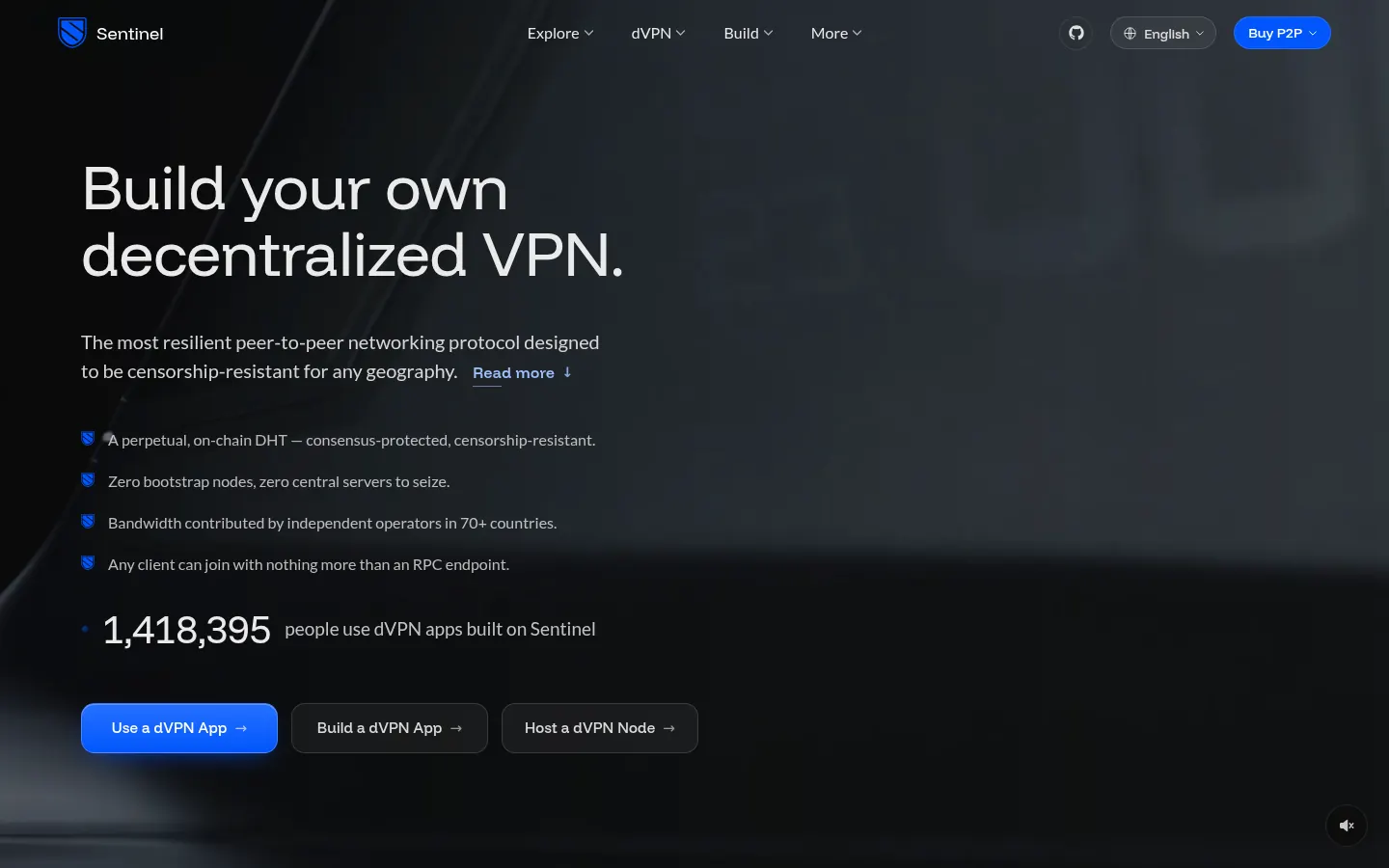
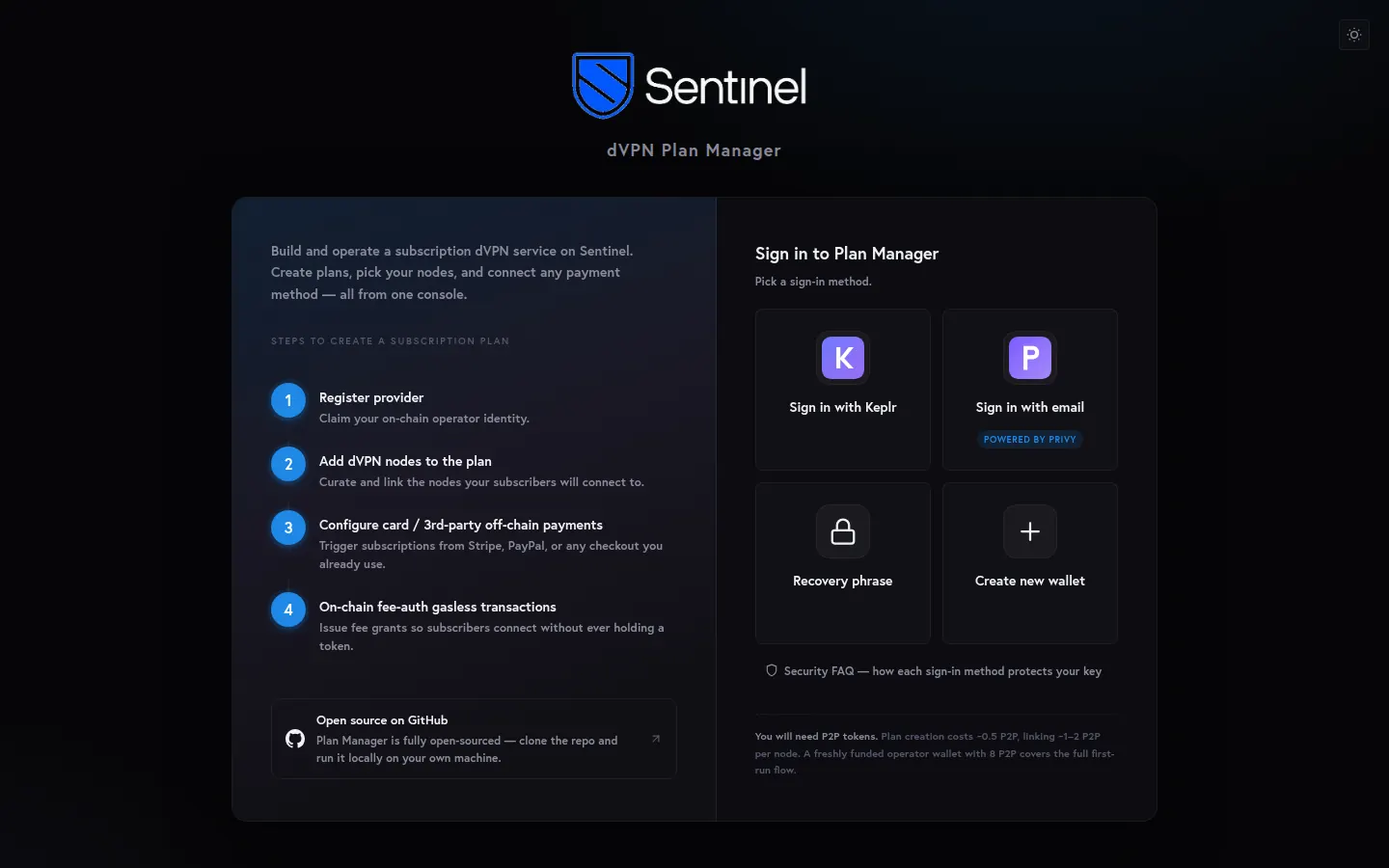
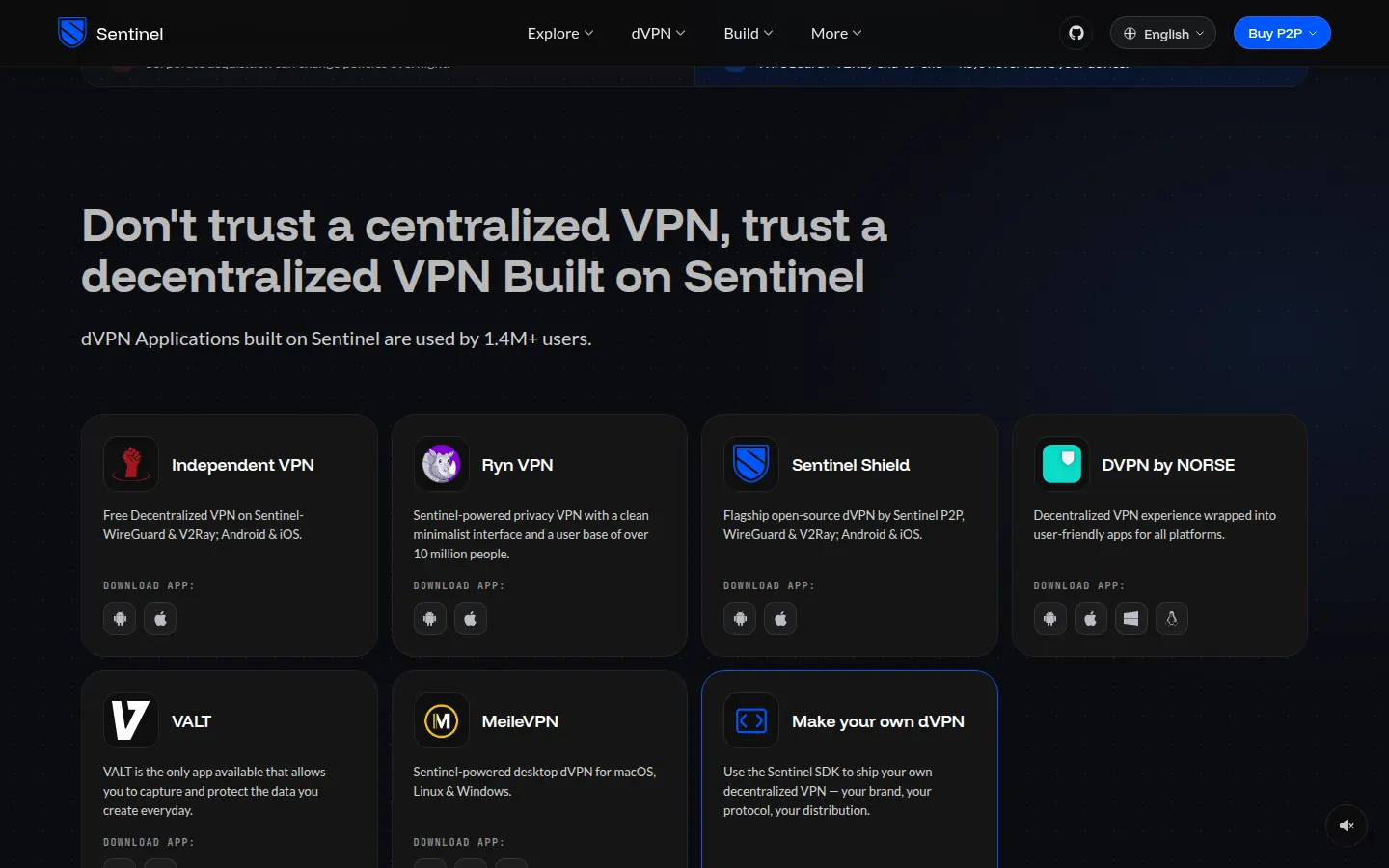
On the website
Captured by our screenshot bot from the live site (or its public archive). A capture is evidence of what the page showed at capture time - not an endorsement.
Bevor du zahlst: prüfe den Verlängerungspreis, das Erstattungsfenster und ob ein günstigerer oder Gratis-Weg deinen Anwendungsfall abdeckt - die ehrliche Checkliste.
Ist Sentinel dVPN (Cosmos bandwidth marketplace, token P2P) seriös?
Stand unserer Prüfungen: 2026-11-02. Sentinel dVPN (Cosmos bandwidth marketplace, token P2P) erreicht 4.8/10 in unserem gewichteten Review. Wir haben 4 rote Flaggen vermerkt (oben aufgelistet). Nutzerberichte, Eigentum und die Vorfallhistorie sind mit datierten Quellen im Meta-Review unten dokumentiert.
What do I actually get for $1/month?
You get access to a decentralized network where third-party apps offer bandwidth, typically around $0.033/day in USDC (~$1/month). You pay per usage or time, not for a guaranteed service level - performance and uptime depend on volunteer nodes.
What is the renewal price and total cost over three years?
The renewal_monthly_equivalent is $1, with a renewal_ratio of 1, so no price increase. The three_year_cash_total is not available - pricing is usage-based or app-dependent, not a fixed subscription.
What proof is there that Sentinel doesn’t log?
None beyond its policy. The logging evidence is policy-only: the architecture claims no central logging, but individual nodes *can* log, and there are no audits or court cases proving otherwise.
Can I use Sentinel in a heavily censored country like China or Iran?
Yes, it’s designed for it - using V2Ray, Hysteria, or Amnezia to evade detection. But success varies: some users report issues, especially after network upgrades, so have backup tools ready.
Can I pay and sign up completely anonymously?
Yes, if you use the pay-as-you-go model with a wallet - no email or ID needed. But fiat payments through third-party apps require personal and payment details.
What happens if Sentinel shuts down or stops working?
The blockchain could persist, but apps and nodes may vanish. There’s no SLA, status page, or support team - users would need to migrate to other dVPN apps or protocols independently.
What’s the honest free or cheap alternative?
Independent dVPN and NORSE Labs DVPN offer free tiers via the Sentinel network. For audited no-logs and accountability, consider flat-priced independents like Mullvad - but they cost more and require some KYC for payment.
Der Meta-Review: was das Internet über Sentinel dVPN (Cosmos bandwidth marketplace, token P2P) sagt
Wir erwarten nicht, dass du uns vertraust. Dieser Review ist ein Meta-Review: unten siehst du, was andere Testportale behaupten - mit ihren Interessenkonflikten gekennzeichnet -, was Nutzer auf Reddit und in Foren berichten und wer Sentinel dVPN (Cosmos bandwidth marketplace, token P2P) wirklich betreibt. Jede Behauptung verlinkt ihre Quelle, damit du sie selbst prüfen kannst.
Was andere Tester sagen (1)
Jede Quelle trägt ein Konflikt-Label aus unserer Testportal-Datenbank. „Affiliate-finanziert“ heißt: Die Seite verdient mit, wenn du kaufst, was sie empfiehlt. Kritische Stimmen nehmen wir bewusst auf.
Fetched 2026-11-02: niche comparison-site review scoring Sentinel 6.4/10; documents $0.033/day and $1/30-days USDC pricing, no KYC, 80/20 node/staker split, open-source stack; flags unclear operator entity ('SNT Foundation/Exidio per 2020 whitepaper; currently maintained by Trinity'), the October 2025 v12 upgrade outage with jailed validators, and subsidised node revenue. Disclosure: same research network as vpncomparison.org; carries affiliate links.
Was Nutzer sagen (3)
Reddit, Foren, HN - paraphrasiert und verlinkt, nie aus dem Kontext gerissen. Anekdoten, keine Beweise - aber Erstattungsbeschwerden und Leak-Reports sind das beste Frühwarnsystem, das dieser Markt hat.
Fetched 2026-11-02 (HTTP 200): HN's dVPN discourse - Sentinel/Mysterium named as the crypto-dVPN pioneers (2019), first-hand user comparisons (2021), the 'no multi-hop, somewhat actively dangerous' critique, and Tor-incentive comparisons; item IDs cited in voices.
KI-Fakten-Report - alles, was wir wissen, komprimiert
Erstellt von Qwen3 am 2026-11-02 aus unserer Faktendatenbank plus den verlinkten Quellen. Er fasst zusammen - er fügt keine Fakten hinzu. Prüfe alles Wichtige gegen die verlinkten Quellen.
Bottom line: Sentinel dVPN is a real decentralized protocol, not a traditional VPN provider. It offers wallet-only signup, no KYC, and ultra-cheap bandwidth via third-party apps and anonymous node hosts. But it’s a trust-minimized system, not a trustless one - your traffic exits through strangers who can log, there’s no accountability, and the network has suffered major outages.
The logging truth: The protocol claims structural no-logs because no central company exists to collect data, but this is policy-only with no audits or court tests. Independent experts (IVPN, Privacy Guides) stress that while logging isn’t centralized, individual exit nodes can and may log your traffic - there’s no way to verify they don’t. Jurisdiction is effectively nonexistent, with no legal entity to hold responsible.
Pricing reality: There’s no subscription from Sentinel itself. You pay per gigabyte or time via third-party apps, often around $1/month equivalent in USDC or P2P tokens. Prices are set by individual node hosts. The catch: you must hold volatile crypto (P2P is down 99.9% from its peak), and fiat payments go through apps that may impose their own terms.
What reviewers say vs what users say: Affiliate reviewers (like bestcloudmining.net) rate it moderately (6.4/10), highlighting low cost and no KYC but flagging governance and reliability risks. Independent privacy watchdogs (IVPN, Privacy Guides) are openly skeptical - calling dVPNs like Sentinel unproven for real privacy. Users report frequent outages (e.g. v12 chain upgrade broke all apps), poor communication, and confusion over the project’s direction, while also celebrating milestones like 1M+ on-chain subscriptions.
Who runs it: No verifiable legal entity operates Sentinel in 2026. The docs are maintained by a validator called "Trinity," and the code is open-source, but the original foundation (SNT/Exidio) is unconfirmed. It’s a decentralized protocol with on-chain governance - meaning nobody is in charge, and nobody can be sued or subpoenaed if things go wrong.
Quellen & wie dieser Review entstand
Jede externe Quelle, die auf dieser Seite verwendet wird, mit dem Abrufdatum und ihrer Belegklasse [A]-[D] (A = Primär-/Betreiberquelle, B = seriöse Presse/Forschung, C = Community, D = eigene Messungen). Methodik: wie wir verifizieren. Quellen verschwinden oder ändern sich - falls ein Link tot ist, sag uns über die Kontaktseite Bescheid.
Evidence classes on this page:[A] A: 7[B] B: 7[C] C: 3[D] D: 0(D stays empty until our own test phase)
The most ambitious attempt to replace the VPN trust model with a market - and one of the least convincing products to actually use. The design is real…
AuditOpen SourceKrypto akzeptiert
Einstieg ca. 0,90 € /one-time
United States - Orchid Labs Inc. / Orchid Technologies LLC, 1288 Columbus Ave, San Francisco, CA (Google Play developer listing); bandwidth exits are run by independent third-party providers worldwide, not by the companydezentrales vpn (dvpn) vor 3 Tg.
A genuine dVPN with real scale (22,000+ active nodes in 135+ countries per the network homepage, 45k bandwidth providers per MystNodes, both fetched…
AuditOpen SourceKrypto akzeptiert
Einstieg ca. 2,00 € /mo
Switzerland and Lithuania - Blockdev AG (Alpenstrasse 14, 6300 Zug, footer fetched 2026-11-02) develops the network; the consumer VPN app is operated by UAB 'MN Intelligence' (Lithuanian company form, mysteriumvpn.com footer fetched 2026-11-02); discovery services run by NetSys Inc; terms-conditions-vpn states disputes are governed by the laws of the Republic of Panama with exclusive jurisdiction in Panamanian courtsdezentrales vpn (dvpn) vor 3 Tg.
Althea should not appear in any consumer VPN comparison as a VPN, and this dossier exists mainly to say so precisely: the project started (2017-2019) as a…
Open SourceKrypto akzeptiert
kostenlos
United States - docs.althea.net footer reads 'Althea Limited 2025'; Fierce Network (May 2024) identifies Deborah Simpier as CEO of Hawk Networks, 'the company behind the Althea platform'; the L1 chain itself is a global proof-of-stake network with no clear single legal seat publisheddezentrales vpn (dvpn) vor 2 Tg.


Noch keine Kommentare - sei der Erste. Das Posten läuft durch einen kurzen Proof-of-Work in deinem Browser (Anti-Spam), kein Konto nötig.